
Economica - owning the contributions from women throughout history
Updated: Aug 3
“Humans are acquisitive creatures. Aside from meeting our daily needs, we have a thirst for beautiful objects, for possessions that express our personality and for items that can provide comfort. In addition to food, clothing, and pots and pans, we fill our homes with furniture, trinkets, and televisions. The efforts to produce more and better versions of our worldly goods, and the never-ending drive to find something new and exciting, are what give rise to economic growth.

Ancient artifacts, historic tax registers, dusty court records, and paintings on gallery walls all help to reveal the myriad ways in which women have contributed to our economies over time. But, despite the wealth of evidence, men are commonly seen as the wizards of business, money, and trade, meaning that women’s involvement in the economy has either been overlooked or treated as a slideshow. And this is in large part because history has been written by men, for men, and about men.”
Historian Victoria Bateman weaves a thrilling, globe-spanning narrative that proves women weren't 'missing' from economic life; they were merely hidden from view. We discover the female workers who helped to build the Great Pyramid of Giza, and to plumb the city of ancient Rome; the silk weavers who made a vital contribution to the development of the Silk Road and global trade; the women who dominated London's brewing trade during medieval times; and the brave twentieth-century pioneers who fought to make our economies not just richer but fairer. Economica rewrites our understanding of women's role in the economy and tells a more accurate economic history of us all.
Economica spans thousands of years and multiple civilizations, revealing how women’s labor, especially in textiles, agriculture, and trade, shaped entire economies at various times. Women are said to be the hidden engine of global prosperity, and yet their contributions have been systematically overlooked. Victoria shows that societies flourish when women have the freedom to earn, spend, invest, and control their own resources.
The author has made a profound case to restore women to the center of the human story. She highlights that women’s freedom is not a “social issue,” it’s an economic force.
As a son, a husband, an uncle, and as a human, I have observed the invisible labor of women over time, many times unpaid. I play my micro part in influencing change, though a tiny drop of water in the mighty ocean of disparity.
As I wrap this note, I notice the Economist cover of the February 14th issue, celebrating the victory of Ms. Takaichi as the next prime minister of Japan. The Economist set her in front of Mount Fuji on the cover, and why did they decide to do that?
The magazine did that as Ms. Takaichi asked the voters if they wanted her to lead them through tumultuous times, and they came back with a big yes, voting her into office. We just need more of such recognition of women’s resilience and ingenuity, across many nations.

Victoria Bateman has taught at the universities of Oxford and Cambridge, most recently as the director of studies in economics at Gonville & Caius College. She is a fellow of the Royal Historical Society and the Royal Society of Arts and author of The Sex Factor and Naked Feminism. She lives in Kent, UK.
A Financial Times Best Book of 2025, Economica places women at the center of the story of economic growth. Starting in the Stone Age and continuing to the present day, it takes the reader through the key economic milestones of the past twelve millennia - from the birth of farming to the advent of computing - all told through the experiences of women as well as men.

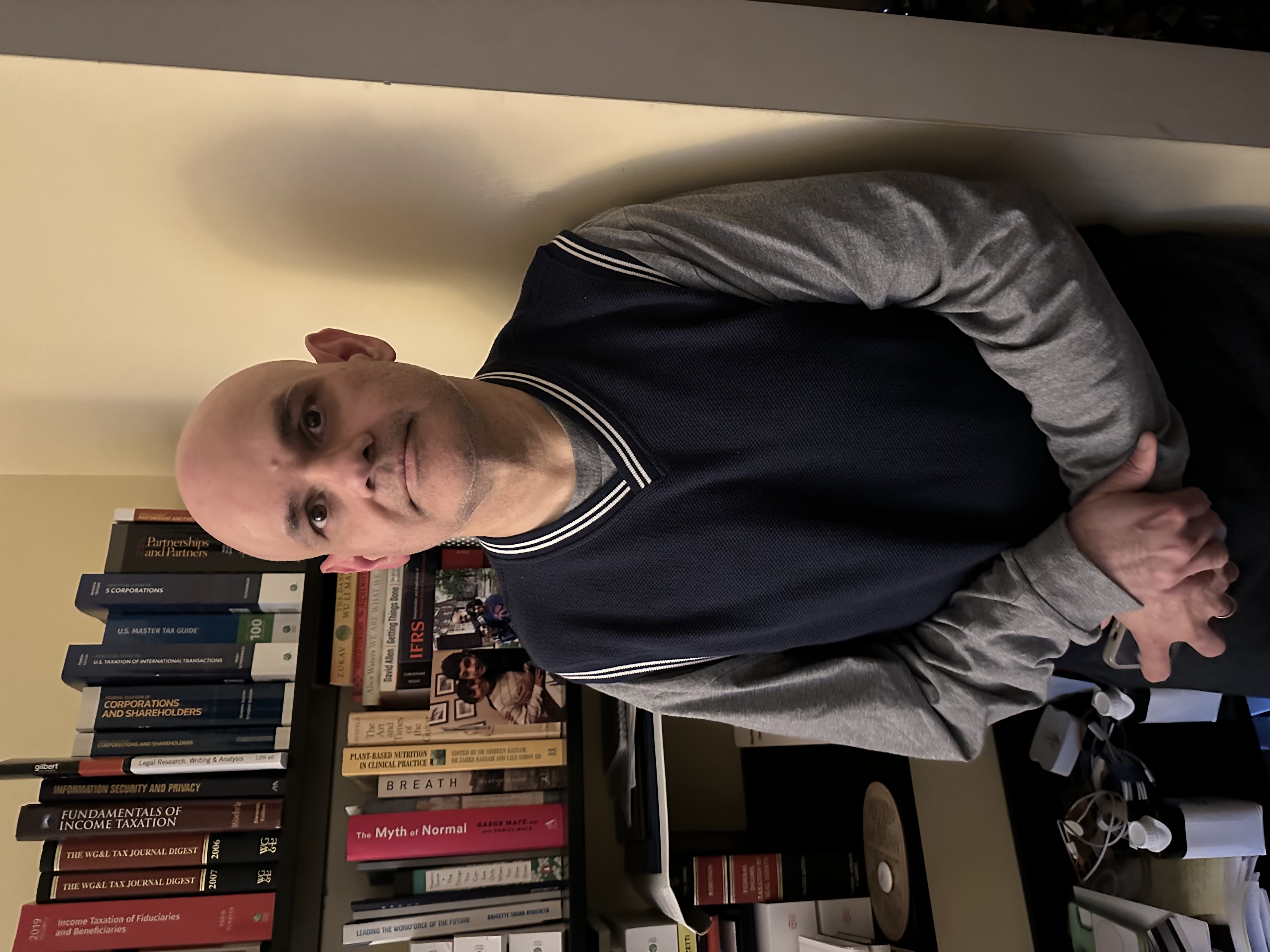
Affan is a US tax professional within the financial services industry. He survived Polio as an infant of twenty-eight days in the early seventies. As a person with disabilities, Affan has been on a lifelong journey seeking ways to manage muscle weaknesses, bone loss, and contain progressive disability that comes with Post Polio Syndrome. He discovered the ‘Whole Foods Plant’ lifestyle during the thick of COVID-19 and adopted the lifestyle evidencing a positive shift in energy and mobility.
Affan moderates book clubs with a focus on books that will lead minds to contemplate the human ability of ‘mind over matter’ and the influence of modern-day technology and environment, on how each of us can best navigate life for our individual needs of health and wellbeing. Affan is also an administrator on our 6D Facebook Page - and the writer of these posts, of course!
6D Living
Wellness in Balance


Comments