
Mayo Clinic uses the art of Improv to Engage Dementia Patients

From PBS Newshour, a short piece which addresses how the Mayo Clinic uses art, creativity and improv to engage and help patients with dementia. The medical community is trying many approaches to help push back against the advance of Alzheimer’s and dementia.
The Mayo Clinic is taking a different and unconventional approach to supplement the traditional treatments. Special Correspondent Megan Thompson reports for the PBS Newshour on their ongoing coverage of the intersection of health and arts, part of their CANVAS series.
"Dementia describes a group of symptoms affecting memory, thinking and social abilities. The symptoms interfere with a person's daily life. Dementia isn't one specific disease. Several diseases can cause dementia. Memory loss is one of the early symptoms of dementia. But having memory loss alone doesn't mean you have dementia because memory loss can have different causes. Alzheimer's disease is the most common cause of dementia in older adults, but there are other causes. Depending on the cause, some dementia symptoms might be reversible." - Mayo Clinic
Scroll down to watch the video from the PBS Newshour, thank you.

Image courtesy of the PBS NEWSHOUR
"Dementia, also called major neurocognitive disorder, isn’t a disease. It's a group of symptoms caused by other conditions. Dementia is a broad term for loss of thinking ability that’s severe enough to interfere with your daily life. Thinking abilities include things such as memory, language skills, problem-solving, visual perception, self-management, and your ability to focus and pay attention." - WebMD
Dementia symptoms may include problems with:
memory loss
thinking speed
mental sharpness and quickness
language, such as using words incorrectly, or trouble speaking
understanding
judgement
mood
movement
difficulties doing daily activities
"People with dementia can lose interest in their usual activities, and may have problems managing their behaviour or emotions. They may also find social situations difficult and lose interest in relationships and socialising. Aspects of their personality may change, and they may lose empathy (understanding and compassion). A person with dementia may see or hear things that other people do not (hallucinations and hearing voices). Because people with dementia may lose the ability to remember events, or not fully understand their environment or situations, it can seem as if they're not telling the truth or are wilfully ignoring problems. As dementia affects a person's mental abilities, they may find planning and organising difficult. Maintaining their independence may also become a problem. A person with dementia will usually need help from friends or relatives, including help with making decisions. The symptoms of dementia usually become worse over time. In the late stage of dementia, people will not be able to take care of themselves and may lose their ability to communicate." -NHS
Key facts
"In 2021, 57 million people were living with dementia worldwide, over 60% of whom live in low-and middle-income countries. Every year, there are nearly 10 million new cases.
Dementia results from a variety of diseases and injuries that affect the brain. Alzheimer disease is the most common form of dementia and may contribute to 60–70% of cases.
Dementia is currently the seventh leading cause of death and one of the major causes of disability and dependency among older people globally.
In 2019, dementia cost economies globally US$ 1.3 trillion, approximately 50% of these costs are attributable to care provided by informal carers (e.g. family members and close friends), who provide on average 5 hours of care and supervision per day.
Women are disproportionately affected by dementia, both directly and indirectly. Women experience higher disability-adjusted life years and mortality due to dementia, but they also provide 70% of care hours for people living with dementia." - WHO
Types of dementia - information from The Cleveland Clinic
There are three types. They differ based on the cause:
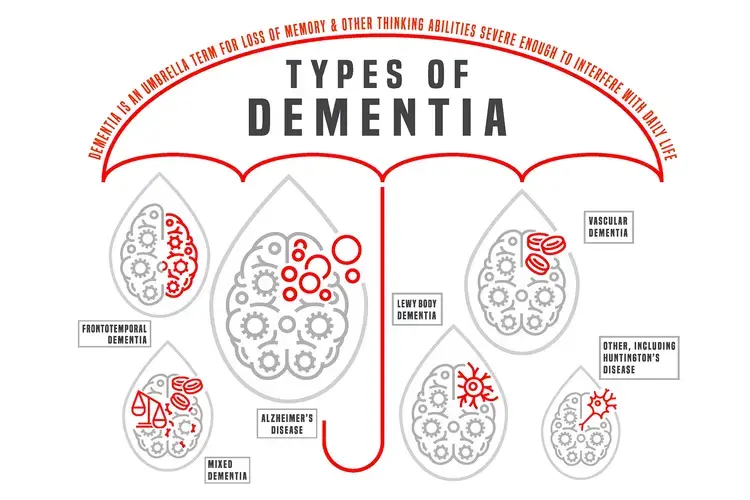
Primary: A brain disease is the main cause of dementia. There aren’t any other causes. Examples include: Alzheimer’s disease, frontotemporal dementia, Lewy body dementia, vascular dementia and mixed dementia (two or more types combined).
Secondary: This type happens from another medical condition that causes changes in your body. The brain dysfunction is a secondary consequence. Examples include infections or alcohol related.
Reversible: Some secondary causes of dementia could be reversible from treatable issues like vitamin deficiency or medication side effects.
6D Living
Wellness in Balance


Comments